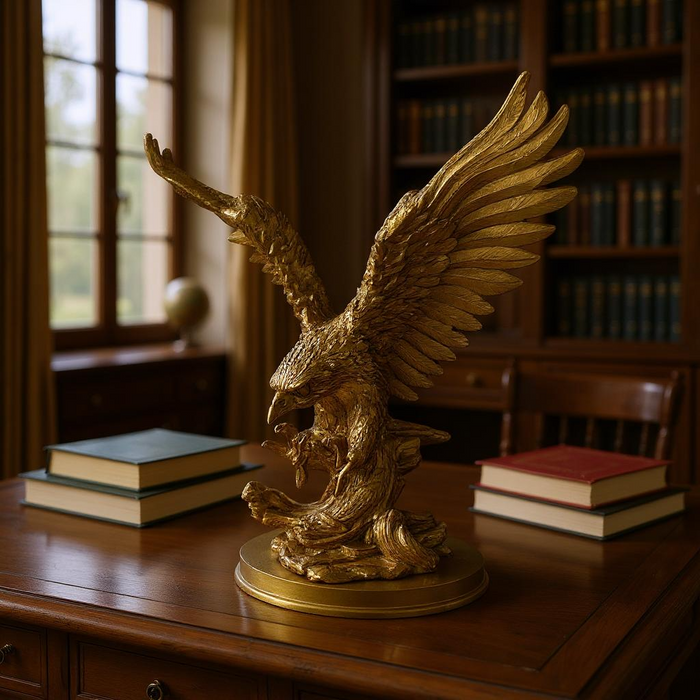
The Craftsmanship Behind Handcrafted Sculptures
Mass-produced decor fills shelves everywhere — but handcrafted sculptures are different.
They carry the artist’s touch, small imperfections that add soul, and a sense of character no machine can recreate.
Behind every handmade sculpture is a process shaped by precision, experience, and artistic intention.
If you've ever wondered what makes handcrafted decor so special, here’s an inside look at the artistry behind it.
1. It Starts With Inspiration & Form
Every handcrafted sculpture begins with an idea — a silhouette, a feeling, or a symbolic shape.
Artists sketch the initial outline, explore proportions, and refine the personality of the figure.
This early stage is what gives handcrafted pieces their emotional depth and identity.
Mass production copies a mold.
Handcrafted decor starts with vision.
2. Shaping the Core: The Hands of the Artist
The base structure is shaped by hand, not by machines.
This step requires:
-
Precision
-
Understanding of form
-
Smooth transitions
-
Balance from every angle
The sculptor constantly evaluates the piece — rotating, smoothing, refining — until the shape carries the exact emotion and attitude intended.
No two handmade pieces are ever identical.
That uniqueness is the beauty.
3. Texturing & Fine Detailing
This is where handcrafted decor truly stands apart.
Small tools, brushes, and carving techniques add:
-
Texture
-
Depth
-
Expression
-
Shadow play
-
Realistic or abstract details
Each line, curve, and indentation has intention behind it — and this level of detail is impossible to mass-produce without losing character.
4. Curing, Drying, and Strengthening
Once shaped, the sculpture must go through a controlled curing or drying process.
This step ensures:
-
Maximum durability
-
Structural integrity
-
Long-lasting form
It’s slow, but necessary.
Skipping or rushing it leads to cracks — which is why handmade pieces feel solid and premium when you hold them.
5. Hand-Painting & Finishing
This is the transformation stage — where the sculpture comes to life.
Finishing may include:
-
Hand-painting
-
Metallic coatings
-
Matte texturing
-
Aging effects
-
Gradient shading
-
Gloss or satin sealing
Each finish determines how the piece interacts with light, how it feels to the touch, and how luxurious it appears in a room.
Hand-painted finishes are richer because the artist controls the depth, shadows, and highlights.
6. Quality Control with Human Eyes (Not Machines)
Every handcrafted sculpture is inspected manually.
No automated process can detect the subtle details that define quality.
The artist checks:
-
Surface smoothness
-
Symmetry
-
Consistency in finish
-
Stability and structure
-
Overall emotion of the piece
This level of care is why handmade decor feels more premium and personal.
Why Handcrafted Sculptures Matter
Handcrafted decor isn't just about aesthetics.
It’s about:
-
Supporting real craftsmanship
-
Owning something unique
-
Bringing character into your home
-
Choosing art over mass production
-
Adding emotional value to a space
A handmade sculpture doesn’t just sit in a room —
it elevates it.